Industry News
Home>Industry News>Global Heavy Equipment Market Update: Excavator Demand Stabilizes Amid Mixed Construction Conditions
Home>Industry News>Global Heavy Equipment Market Update: Excavator Demand Stabilizes Amid Mixed Construction Conditions
The global heavy equipment market, particularly the excavator segment, showed mixed but relatively stable conditions during early July, as demand continued to be driven by infrastructure development, quarrying operations, and large-scale earthmoving projects.
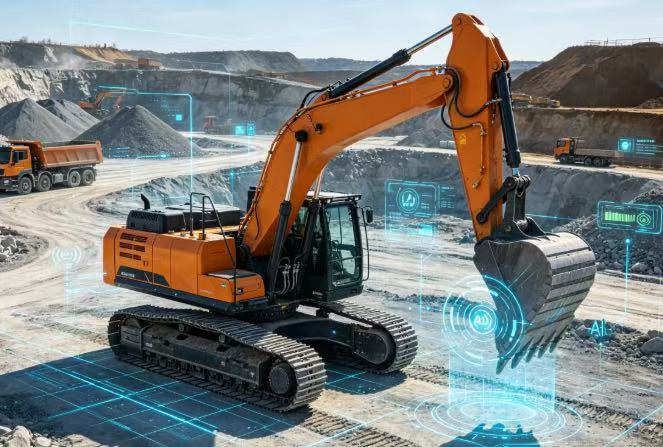
In Europe, ongoing investment in quarry and aggregate production has supported demand for large crawler excavators. A recent fleet expansion involving a 90-ton class hydraulic excavator highlights continued reliance on high-capacity machines for bulk material extraction and heavy-duty operations. Despite broader construction uncertainty in some regions, quarrying activity remains a stable demand pillar for OEMs and contractors.
At the same time, global excavator sales trends reflect uneven momentum. While infrastructure-related sectors such as public works, energy, and logistics continue to support equipment utilization, new machine orders have shown signs of slowing in several markets. Higher financing costs and delayed project approvals have led some contractors to shift toward rental-based equipment usage rather than direct ownership, particularly in the mid-size excavator category.
On the technology side, automation remains one of the most important long-term drivers of the industry. Recent developments in autonomous excavator systems and AI-assisted earthmoving solutions are progressing from testing phases toward early real-world deployment. These systems aim to improve precision in grading and digging operations while reducing operator workload and improving jobsite efficiency. Industry analysts expect adoption to begin in controlled environments such as mining and quarrying before expanding into general construction applications.
Meanwhile, major OEMs continue to adjust their strategies around electrification and regional production. Manufacturers are increasingly investing in hybrid and electric excavator platforms, while also expanding localized manufacturing capacity to reduce supply chain risk and meet tightening emissions regulations across key markets.
Overall, the excavator industry remains in a transitional phase—balancing short-term demand fluctuations with long-term structural changes driven by automation, electrification, and evolving procurement models.